New: Take the KSM™ AI Visibility Assessment and identify what is limiting your visibility in AI-generated answers. Start now

KSM™ Articles

Writing on AI visibility, entity authority, and knowledge readiness.

Research notes and practitioner writing from the creator of the Knowledge Structuring Model. Full articles live on their original publications; each card links to the canonical source.

Library

Browse by category.

Filter articles by category

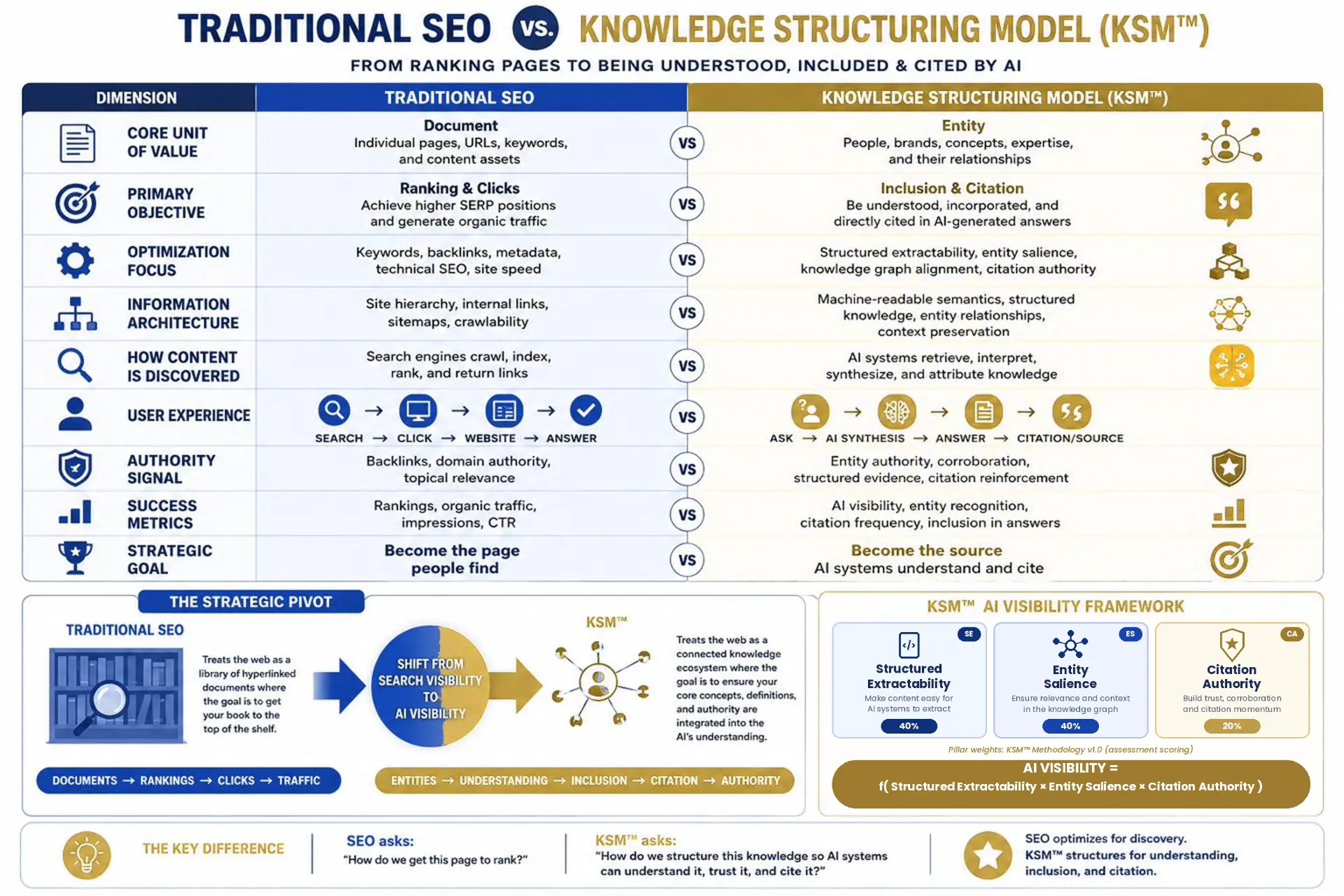
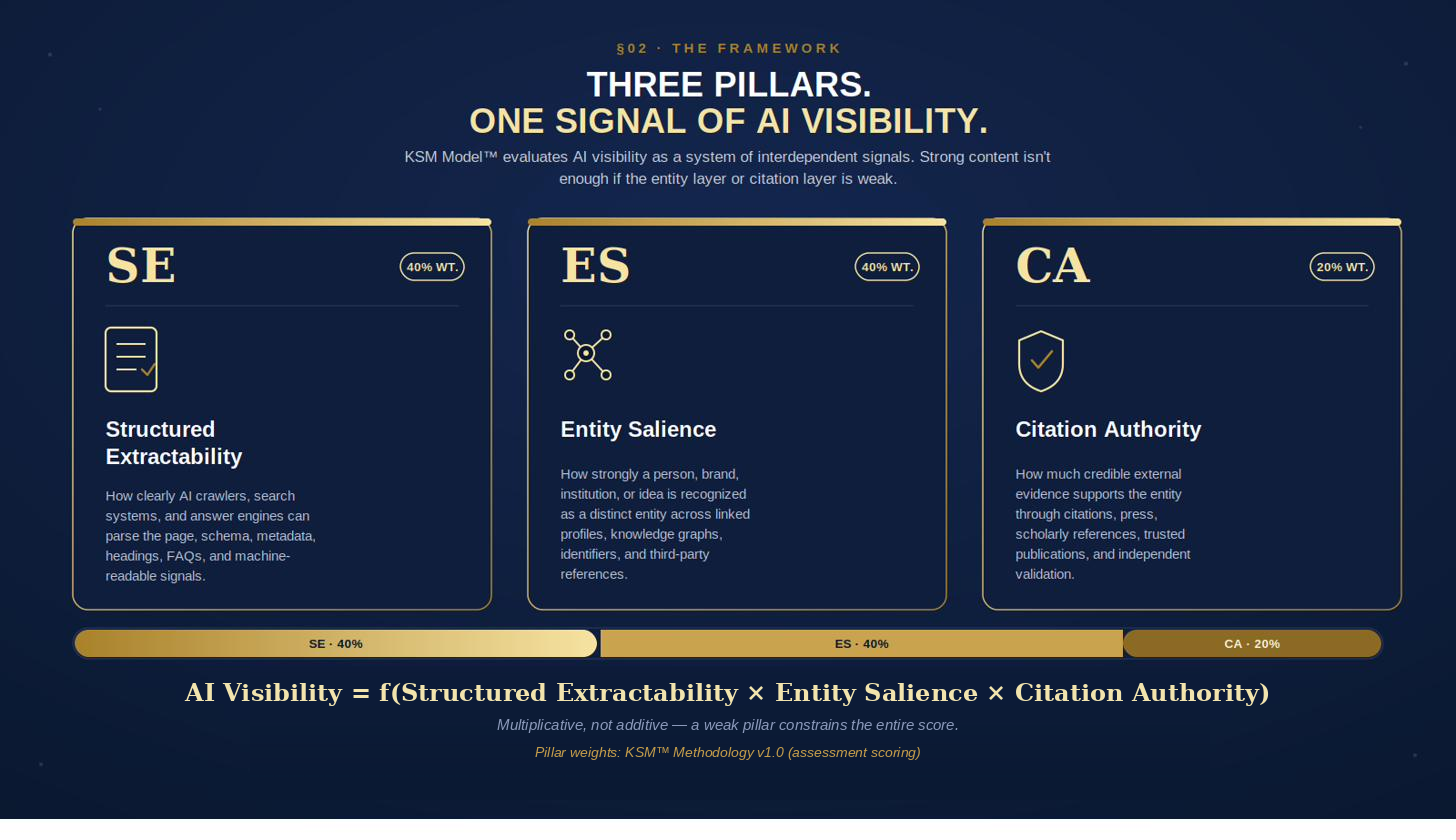
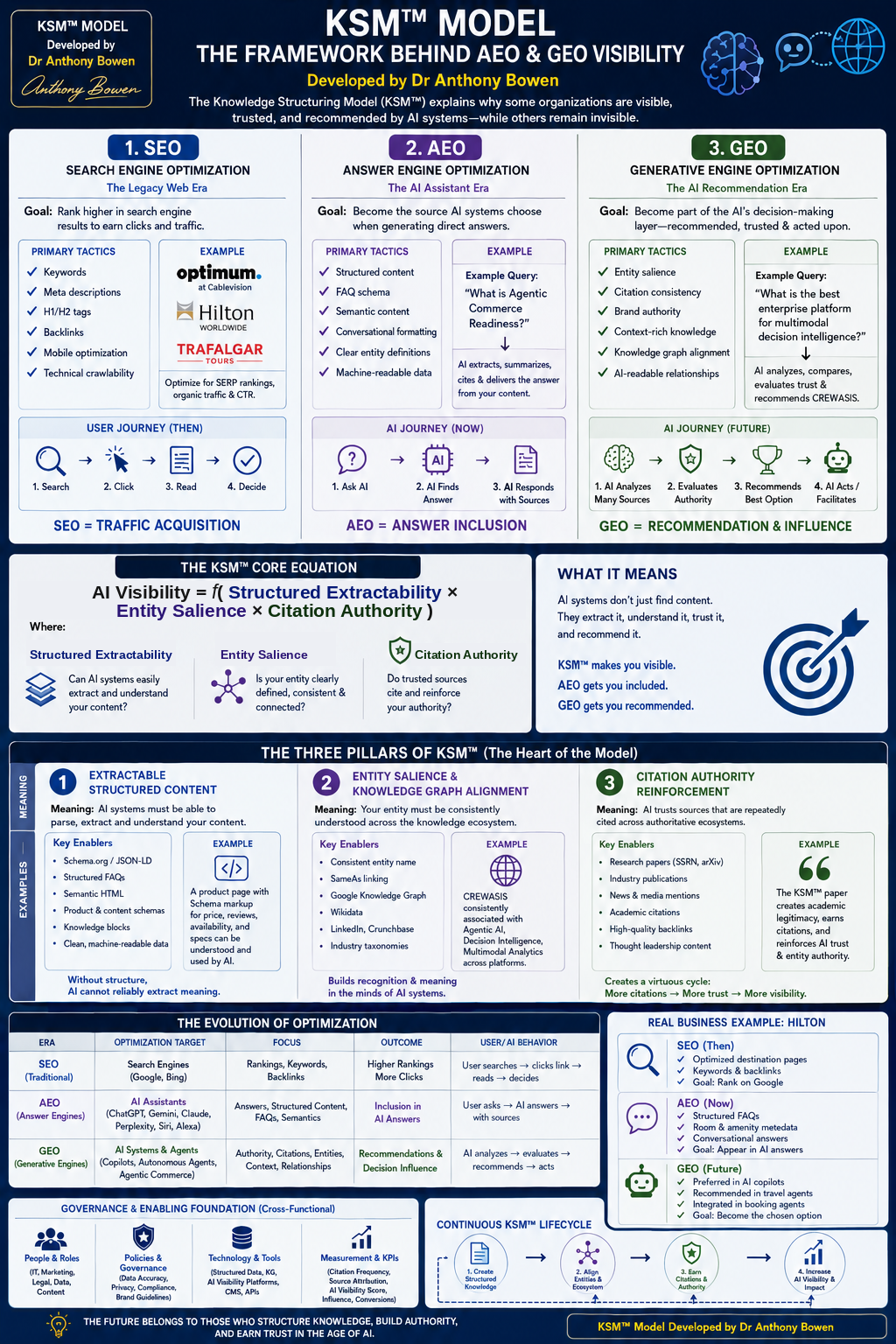
  • The three pillars of the Knowledge Structuring Model: Extractable Structured Content at 40 percent, Entity Salience and Knowledge Graph Alignment at 40 percent, and Citation Authority Reinforcement at 20 percent, combining into an AI visibility score.

    KSM™

    The Knowledge Structuring Model (KSM™): An Introduction

    Dr. Anthony Q. Bowen · · 12 min read

    The original framework in summary: why AI visibility behaves as a product of extractable structured content, entity salience, and citation authority rather than a sum of tactics.

    Read at the source

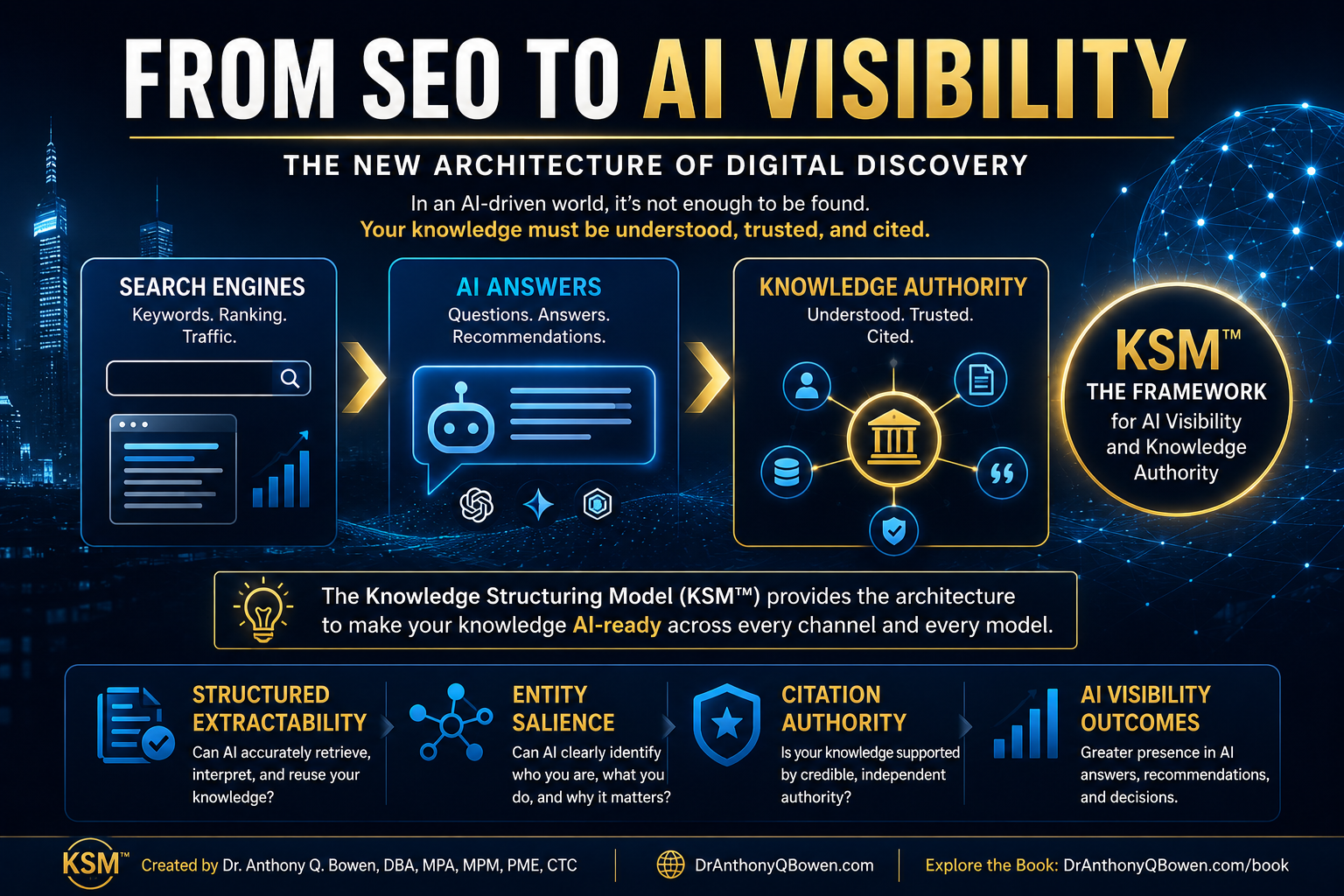
  • From SEO to AI visibility with the KSM model: structured content, entity salience, and citation authority replacing ranking-only thinking.

    AEO & GEO

    AEO and GEO: What Changes When the Answer Replaces the Result

    Dr. Anthony Q. Bowen · · 8 min read

    Answer-engine and generative-engine visibility depend on retrievable evidence and resolvable entities. A practical view of what teams should measure instead of position.

    Related research at the sourceA dedicated article page for this topic is not published yet.

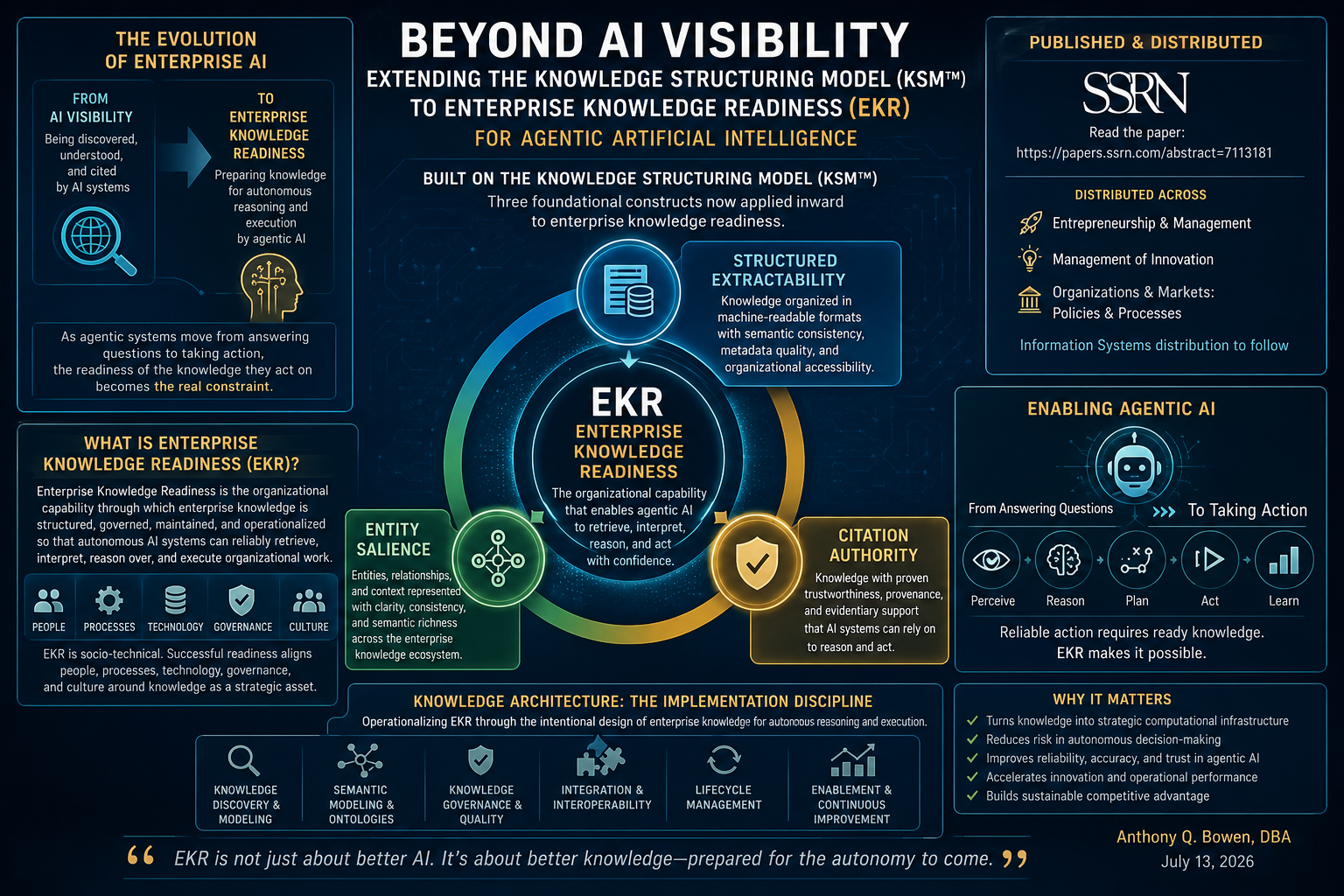
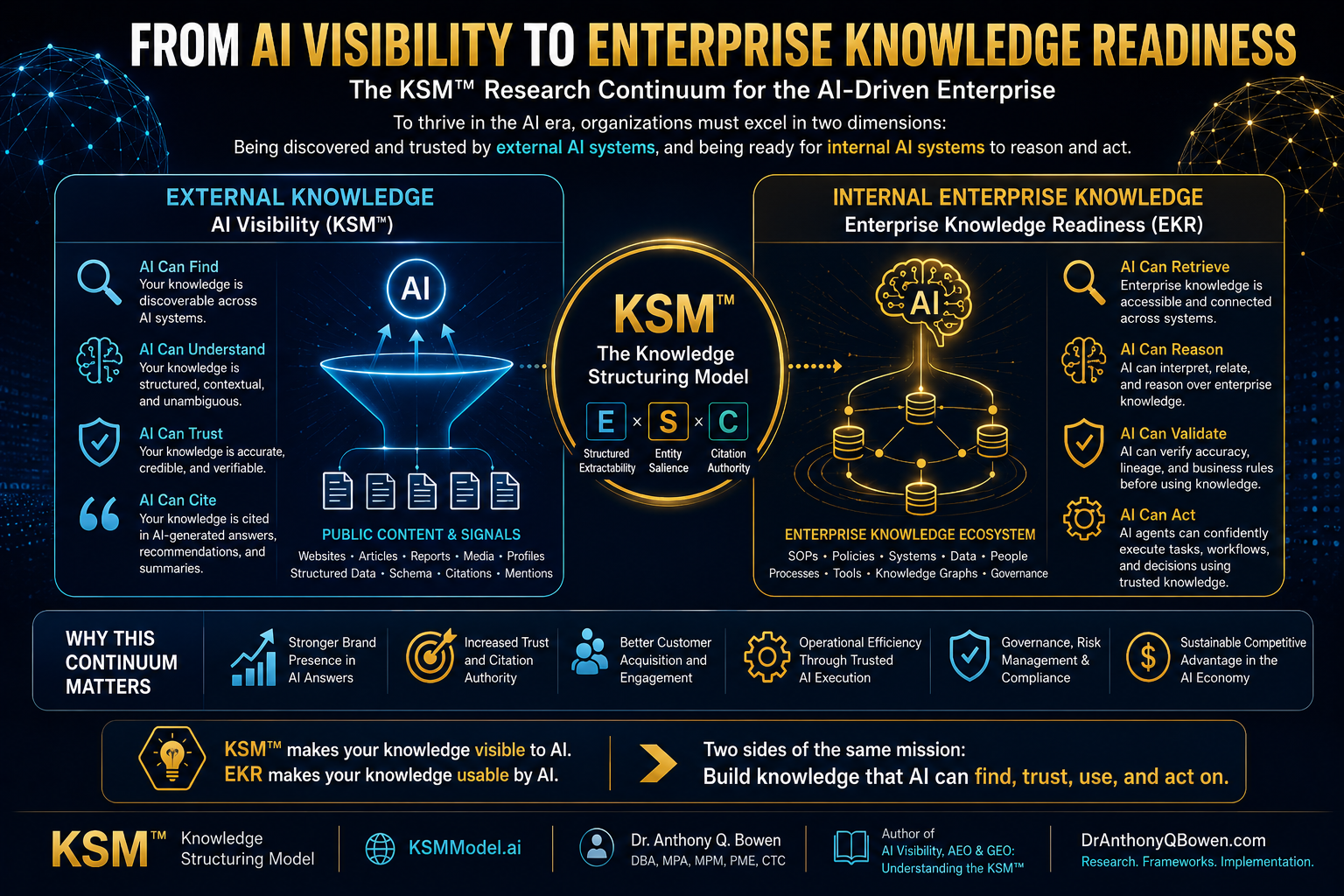
  • Enterprise Knowledge Readiness beyond AI visibility: structured, governed, accessible, and reliable knowledge for AI and agentic systems.

    Enterprise Knowledge Readiness

    Enterprise Knowledge Readiness: Beyond AI Visibility

    Dr. Anthony Q. Bowen · · 10 min read

    External visibility is only half the problem. EKR examines whether enterprise knowledge is structured, governed, accessible, and reliable enough for AI and agentic systems to operate on.

    Related research at the sourceA dedicated article page for this topic is not published yet.

  • Agentic AI

    Warrant Clearing for AI Agents

    Jabran I. Chaudry and Dr. Anthony Q. Bowen · · 11 min read

    Before an agent acts, something has to judge whether the available evidence and authority are sufficient. Warrant clearing frames that judgment as a first-class step in agentic systems.

    Related research at the sourceA dedicated article page for this topic is not published yet.

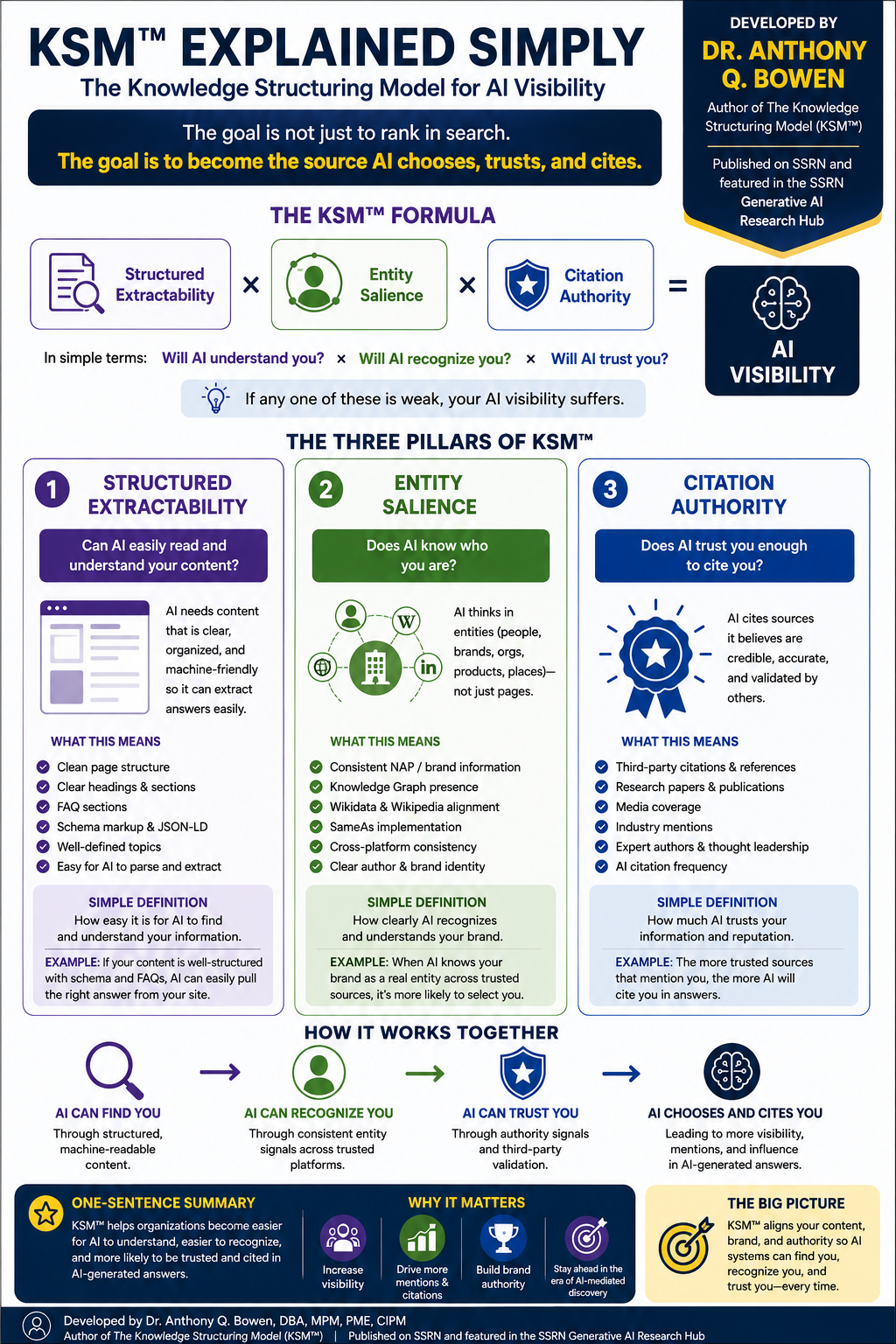
  • KSM explained in simple terms: can AI understand you, can AI recognize you, and can AI trust and cite you.

    Knowledge Architecture

    Designing Knowledge Architecture AI Can Extract

    Dr. Anthony Q. Bowen · · 7 min read

    Headings, definitions, evidence blocks, and schema that matches visible content: how structural decisions determine whether a machine can extract what you know.

    Related research at the sourceA dedicated article page for this topic is not published yet.

  • The Knowledge Structuring Model diagram showing the AI Visibility formula as a function of Extractable Structured Content, Entity Salience, and Citation Authority, with maturity stages and business impact.

    Research

    Inside the KSM™ 100-Point Methodology

    Dr. Anthony Q. Bowen · · 9 min read

    How pillar weights, evidence rules, scoring bands, and stated limitations combine into a repeatable, auditable assessment rather than an opinion score.

    Read at the source

  • Diagram of the relationship between the Knowledge Structuring Model and Enterprise Knowledge Readiness, showing external AI visibility alongside internal knowledge readiness.

    Strategy & Implementation

    Sequencing AI Visibility Work by Constraint

    Dr. Anthony Q. Bowen · · 8 min read

    A structured program designed to improve measurable AI-visibility signals starts with the constraining pillar, not the easiest task. How to order the work and report progress honestly.

    Related research at the sourceA dedicated article page for this topic is not published yet.

Subscribe via the KSM™ Atom feed, or review the original research.